


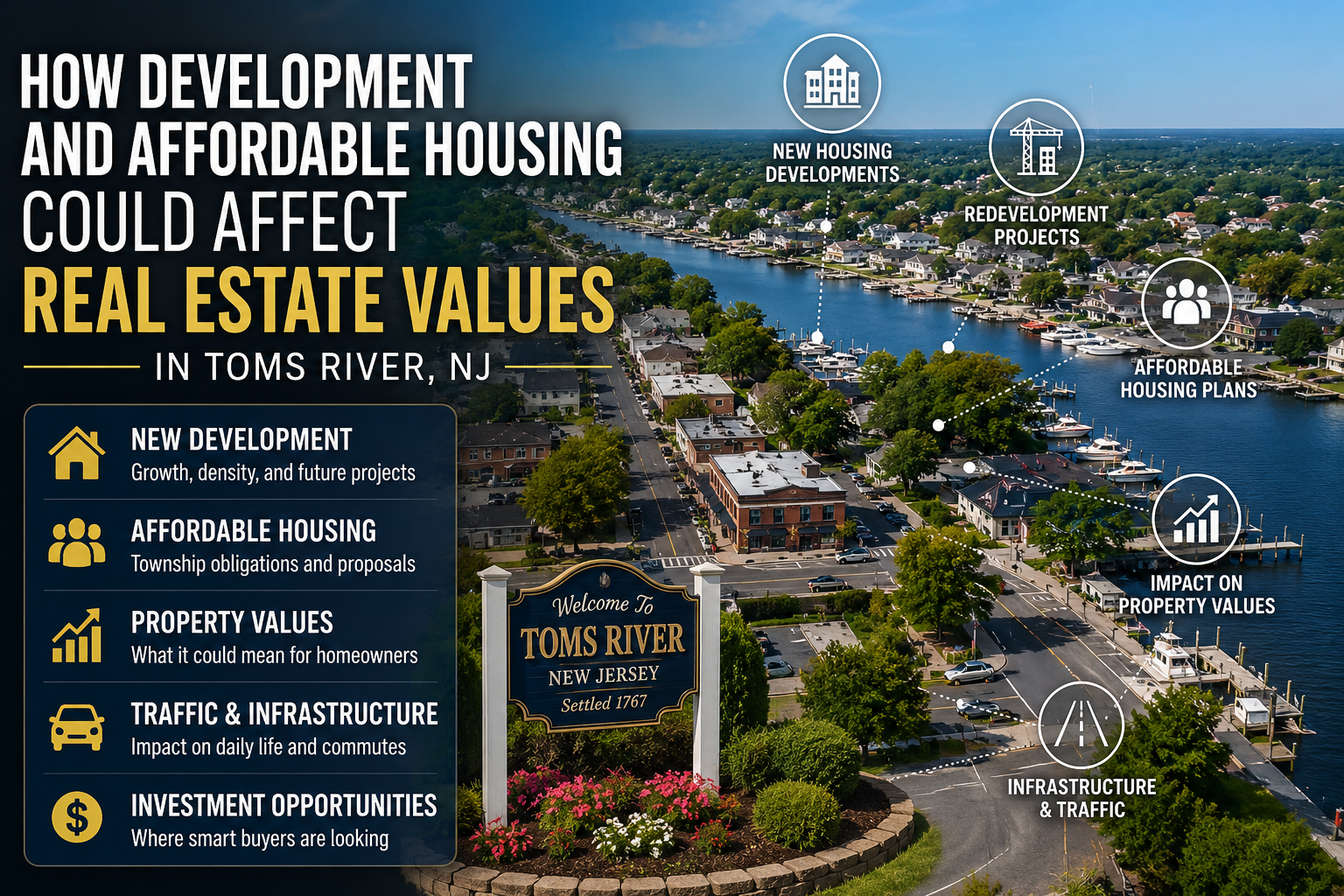
 How Development and Affordable Housing Could Affect Real Estate Values in Toms River NJ
Over the past several years, Toms River has become one of the most talked-about towns in Ocean County when it comes to affordable housing, redevelopment, zoning changes, and future growth.
As a Realtor working throughout Ocean County and the Jersey Shore — and someone who regularly speaks with homeowners, buyers, investors, and local residents — I’ve noticed one thing clearly:
People are increasingly asking how development could affect property values, traffic, neighborhood character, taxes, schools, and long-term quality of life.
While many discussions remain politically controversial or still in early planning stages, there are several areas throughout Toms River already seeing:
official redevelopment plans
affordable housing negotiations
multifamily proposals
overlay zoning discussions
growth pressure
redevelopment speculation
Understanding these areas is becoming increasingly important for:
buyers
sellers
investors
landlords
waterfront homeowners
anyone considering long-term real estate decisions in Ocean County
Why Development Matters to Property Values
One common misconception is that all development either destroys property values or automatically increases them.
In reality, the impact depends heavily on:
location
density
infrastructure
traffic patterns
flood risk
commercial growth
school capacity
neighborhood demand
Some redevelopment can revitalize neglected corridors and increase nearby demand.
Other projects may raise concerns involving:
congestion
parking
overdevelopment
infrastructure strain
changing neighborhood character
That’s why hyperlocal knowledge matters so much in real estate.
The 10 Development Areas and Issues Buyers Should Watch Closely
1. Route 70 Growth Corridor
One of the largest development pressure areas in Toms River involves the Route 70 corridor near the Lakewood border.
Affordable housing settlements and redevelopment discussions have repeatedly referenced this area for:
multifamily development
inclusionary housing
mixed-use growth
This area already experiences heavy traffic and significant growth pressure, making it one of the most closely watched corridors in Ocean County.
Read our detailed analysis of why Route 70 is becoming one of the most important real estate growth corridors in Toms River.
2. Route 9 Township-Owned Land Discussions
Some of the most controversial conversations involve township-owned parcels along Route 9 that have reportedly been discussed as potential affordable housing or redevelopment sites.
Residents have raised concerns involving:
density
traffic
loss of open space
future overdevelopment
While some discussions remain preliminary or politically disputed, the issue has become a major topic among local homeowners and residents.
3. Downtown Waterfront Redevelopment
Downtown Toms River redevelopment proposals have sparked years of debate.
Projects involving:
apartment construction
mixed-use redevelopment
waterfront revitalization
downtown redevelopment initiatives
have created both excitement and concern.
Some residents believe redevelopment could help modernize the downtown area and improve property values, while others worry about congestion, flooding concerns, parking, and changing neighborhood character.
4. Route 37 Redevelopment Pressure
Route 37 may become one of the next major redevelopment corridors in Ocean County.
Proposals and discussions have included:
apartments
townhomes
retail redevelopment
mixed-use concepts
Because Route 37 already serves as one of the primary traffic arteries connecting inland Ocean County to the barrier island communities, future development here could significantly affect both traffic and nearby property demand.
5. Jamestowne Village Expansion
One of the more concrete affordable housing components discussed involves expansion and redevelopment associated with existing apartment communities.
This strategy focuses more on:
expanding existing multifamily housing
creating additional affordable units
preserving affordability credits
rather than building entirely new large-scale developments from scratch.
6. Hope’s Crossing Affordable Housing Strategy
Toms River officials have also explored preserving existing affordable housing obligations through:
deed restrictions
affordable housing credit preservation
extension agreements
rather than approving large new developments.
This strategy has become an important part of the broader affordable housing discussion in Toms River.
7. Church Road and North Dover Growth Pressure
Semi-rural and suburban portions of North Dover are increasingly facing subdivision and residential growth pressure.
Areas near Church Road have already seen development proposals involving residential expansion and subdivision concepts.
Many residents in these areas are concerned about:
loss of open space
increased traffic
drainage concerns
suburban sprawl
infrastructure strain
8. MF-16 Overlay Zone Debate
One of the least understood — but potentially most impactful — issues involves MF-16 overlay zoning discussions allowing higher residential density in designated areas.
Many residents may not fully realize how significantly overlay zoning can affect:
neighborhood character
future development patterns
density
traffic
long-term property values
This will likely remain an important issue moving forward.
9. Massachusetts Avenue and Lake Ridge Discussions
Some quieter discussions involving rezoning and future housing possibilities have surfaced near Massachusetts Avenue and Lake Ridge areas.
While much of this remains preliminary, residents continue watching these discussions closely as Toms River attempts to address ongoing housing obligations and future growth planning.
10. The Fear of “Lakewood-Style Expansion”
Perhaps the biggest unofficial issue driving public concern is fear that parts of Toms River could eventually experience:
large-scale multifamily growth
rapid density increases
worsening traffic
infrastructure strain
especially along northern growth corridors.
Even when not directly stated, this concern appears repeatedly in local discussions, council meetings, and community conversations.
Because of this, many homeowners and buyers are paying closer attention to development proposals than ever before.
Why This Matters for Buyers and Investors
For buyers, these issues may affect:
future appreciation
traffic patterns
taxes
flood mitigation
neighborhood demand
investment opportunities
For investors, redevelopment often creates:
value-add opportunities
multifamily demand
rental growth potential
commercial redevelopment possibilities
The key is understanding where growth is happening — and where it may happen next.
Why Local Knowledge Matters More Than Zillow
Online estimates and national websites rarely explain:
redevelopment politics
local zoning pressure
flood concerns
neighborhood-specific trends
traffic realities
community sentiment
Two homes only a mile apart may have completely different long-term outlooks depending on nearby development patterns.
That’s where local experience becomes extremely valuable.
Final Thoughts
Toms River sits at the center of many major Ocean County growth trends:
population migration
shore demand
redevelopment pressure
affordable housing obligations
suburban expansion
Some projects may revitalize areas and improve long-term values.
Others may create legitimate concerns regarding density and infrastructure.
The most important thing for buyers, sellers, and investors is understanding the local landscape before making major real estate decisions.
Over the coming weeks, I’ll be publishing deeper breakdowns of each of these areas and what they could potentially mean for real estate values, investment opportunities, neighborhood growth, and quality of life throughout Toms River and Ocean County.
Sources and References
Information for this article was gathered from:
Ocean County planning discussions
township redevelopment discussions
local government materials
public redevelopment proposals
affordable housing discussions
local news reporting
community planning conversations
Readers should verify current proposals and approvals directly with local officials, township meetings, and planning boards, as development discussions and approvals may change over time.
About the Author
Peter Halecky is a New Jersey Realtor serving Ocean County, the Jersey Shore, and North Jersey markets. With experience in real estate investing, business leadership, and local market analysis, he focuses on helping buyers, sellers, and investors better understand the trends shaping local real estate values and opportunities.
Thinking About Buying, Selling, or Investing in Ocean County?
I’m always happy to help clients better understand:
redevelopment trends
waterfront values
zoning concerns
flood zones
neighborhood growth patterns
local market opportunities
Reach out anytime for local insight from North Jersey to the Shore.